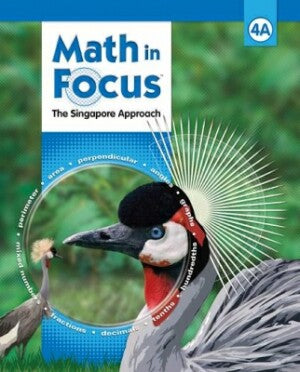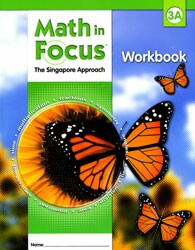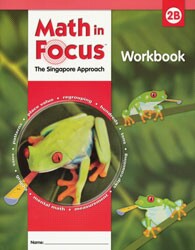
Math in Focus: The Singapore Approach
Math in Focus from Houghton Mifflin Harcourt presents the Singapore approach to math in a way that is easy to use and understand. Available for Kindergarten through 5th grade, Math in Focus: The Singapore Approach is the United States edition of Singapore’s most widely used program.
Singapore Math Curriculum is a problem-based approach that thoughtfully builds on a
concrete-to-pictorial-to-abstract progression for greater depth of
instruction and mastery of math concepts. Visualization strategies
including model drawing allow students to master more complex
problems. The program also uses powerful number bond models to enhance
the instruction for mental math, number sense, and computation.
• Carefully paced instruction that focuses on teaching fewer math topics
per year to a level of mastery
• Consistent use of visual models and manipulatives that carefully
bridge the concrete and the abstract—encouraging algebraic thinking,
facilitating communication of math ideas, and solidifying learning
• Instruction centered around problem solving using multiple models to
help students visualize and understand the math concepts
• Ample practice for continuous ongoing assessment
Within each grade fewer topics are taught,
but at a more in-depth level; visual representations, modeling
strategies, and a development of conceptual understanding, place value,
and computation fluency help students to understand the “how” and "why" behind
their exercises.
Discover for yourself Singapore’s method to attain outstanding math
achievement through Math in Focus!
Learn More about the Singapore Math Approach:
Singapore Math Curriculum is a problem-based approach thoughtfully builds on a concrete-to-pictorial-to-abstract progression for greater depth of instruction and mastery of math concepts. Visualization strategies including model drawing give all allow students to master more complex problems. The Math is Focus program also uses powerful number bond models to enhance the instruction for mental math, number sense, and computation.
Within each grade fewer topics are taught, but at a more in-depth level; visual representations, modeling strategies, and a development of conceptual understanding, place value, and computation fluency help students to understand the “how” behind their exercises.